Venomous: How Earth’s Deadliest Creatures Mastered Biochemistry
Christie Wilcox | Scientific American/Farrar, Straus and Giroux | 2016 |
⭐⭐⭐⭐½ — 4.5/5
Popular science books about dangerous animals tend to fall into one of two traps: they either sensationalize the danger at the expense of the science, or they bury the wonder under impenetrable jargon. Christie Wilcox’s Venomous does neither. The result is one of the more satisfying entries in nature writing in recent years a book that earns its thrills honestly, through biochemistry.
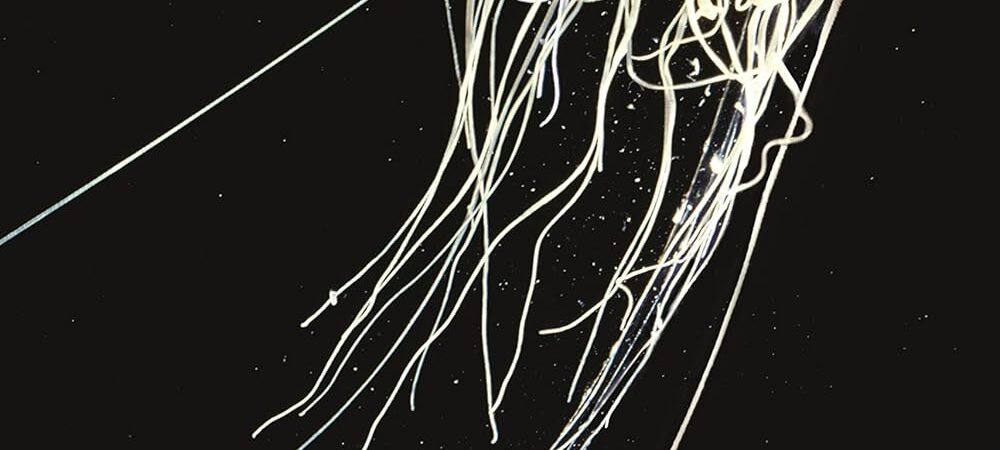
Wilcox, a molecular biologist, takes readers from the coastlines of Indonesia to the rainforests of Peru in pursuit of a deceptively simple question: how did animals evolve chemistry so precise, so lethal, and so varied that it continues to outpace our best pharmaceutical research? Along the way she encounters jellyfish capable of killing a human in minutes, a two-inch caterpillar whose bristles trigger systemic hemorrhaging, and a blue-ringed octopus whose saliva can induce complete paralysis. These are not merely shock exhibits. Each creature is a case study in molecular innovation.
What distinguishes Wilcox from many science communicators is that she writes from inside the research, not around it. She completed her PhD in Cell and Molecular Biology with a specialization in Ecology, Evolution and Conservation Biology, and that training is evident throughout. The chapters on venom evolution and receptor binding are handled with genuine thoroughness, yet remain accessible to an engaged lay reader. Her treatment of neurotoxic versus hemotoxic venom mechanisms how one silences the nervous system while the other dismantles tissue at the cellular level is among the clearest explanations of these processes I have encountered outside of a primary literature context.
The book also broadens its scope usefully, covering venom resistance in species like the honey badger and mongoose, the development of antivenoms, and the disproportionate burden of envenomation deaths in lower-income regions where medical access is limited. This socioecological dimension gives Venomous a moral weight that many natural history books avoid.
If there is a critique to be made, it is that some chapters build towards mechanistic questions that remain unanswered partly because the science itself is unresolved. Readers expecting clean conclusions may find this frustrating. Scientists will recognize it as honest.
Wilcox argues that venomous creatures are keystone species playing crucial ecological roles, and that venom research is already yielding medicines for some of humanity’s most complex diseases. It is a compelling case, made with both authority and warmth. Venomous is the rare popular science book that would satisfy a biochemist and captivate a curious teenager equally.
Recommended for: Readers of Carl Zimmer, Ed Yong, and anyone who has ever wondered what evolution looks like at the molecular level.
Get the book: Venomous by Christie Wilcox on Amazon
Affiliate Disclosure: This post contains affiliate links. If you purchase through my link, I may earn a small commission at no extra cost to you. See my full Affiliate Disclosure for details.